
Pastoral Letter: 4th Quarter 2024
December 2, 2024
Pastoral Letter: 2nd Quarter 2025
June 26, 2025Pastoral Letter: 4th Quarter 2024
December 2, 2024Pastoral Letter: 2nd Quarter 2025
June 26, 2025
AFM Family,
AFM Family,
As we continue our faith journey, we are reminded of the importance of both spiritual and practical balance in our lives. In this edition, we reflect on “Divine Healing” as a core truth deeply woven into the DNA of our Church - a testament to God’s power and faithfulness throughout our history. May this article renew your faith in His ability to restore and sustain.
We also explore key principles for balancing ministry and life, recognizing that every believer, whether in full-time ministry or the workplace, faces the challenge of maintaining a healthy rhythm. These practical insights will encourage you to serve with passion while nurturing your personal well-being, relationships, and spiritual growth.
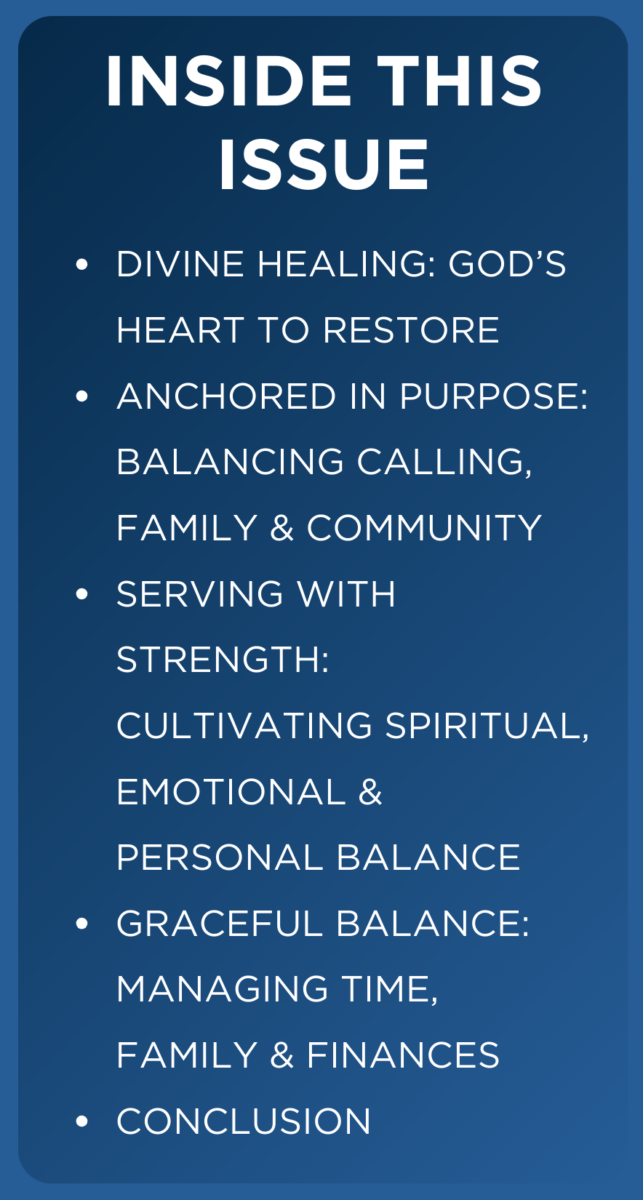
1. DIVINE HEALING: GOD’S HEART TO RESTORE
Divine healing is when God supernaturally restores health and wholeness. Throughout the Bible, we see His desire to heal and make people whole - physically, emotionally, and spiritually.
The Biblical Foundation of Healing. From the beginning, God revealed Himself as our healer. In Exodus 15:26, He told His people that if they listened to Him and followed His ways, He would heal them: “For I am the Lord who heals you.” This is where we get the name Jehovah Rapha, meaning “The Lord who heals.” In the New Testament, Jesus reaffirmed this promise. Mark 16:17-18 says that those who believe in Him will see signs of healing: “…They will place their hands on sick people, and they will get well.”
Healing in the Ministry of Jesus. Healing was at the heart of Jesus’ ministry. Matthew 4:23 tells us that Jesus travelled from place to place, teaching, preaching, and healing every disease and sickness. This fulfilled what the prophet Isaiah had spoken: “He took our infirmities and bore our diseases.” (Matthew 8:17). One powerful example is the woman who had suffered for 12 years. She touched Jesus’ cloak, believing in His healing power, and He told her: “Daughter, your faith has healed you. Go in peace and be freed from your suffering.” (Mark 5:34). Healing is not just a demonstration of God’s power but also His love and compassion. Isaiah 53:5 tells us that through Jesus’s sacrifice on the cross, we receive healing: “…By His wounds, we are healed.”
Practical Steps to Receive Healing. The Bible gives us clear steps to seek healing:
- Pray and seek God’s Word – Healing comes from spending time in God’s presence.
- Ask others to pray for you – James 5:14-15 encourages believers to call on church elders to pray and anoint the sick with oil.
- Trust in God’s timing – Healing may not always be immediate, but God is always at work.
- Share testimonies – Hearing about others' healing builds faith and encourages more people to trust God.
Not all healing happens instantly or in the way we expect. I have seen God heal miraculously, but I have also seen faithful believers who did not receive physical healing. My own father became blind as a child, and though we prayed for years, he was never physically healed. Yet, he remained strong in his faith, serving God until the age of 95, still believing in divine healing. Ultimately, our greatest healing is found in eternal life.
Revelation 21:4 promises: “He will wipe every tear from their eyes. There will be no more death or mourning or crying or pain.”
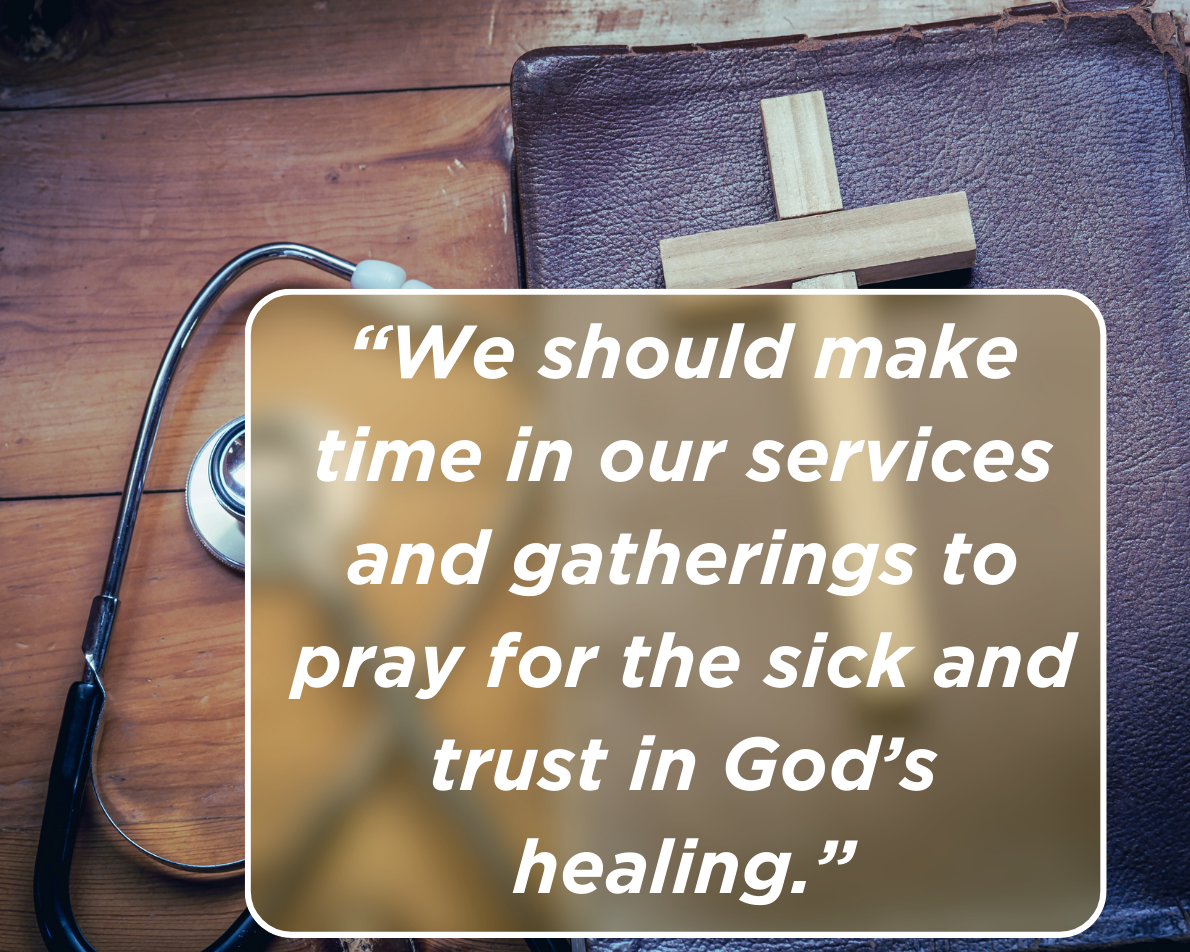
We should make time in our services and gatherings to pray for the sick and trust in God’s healing. Divine healing is part of our DNA and history; let us not neglect it.
2. ANCHORED IN PURPOSE: BALANCING CALLING, FAMILY & COMMUNITY
Calling. This specific point is especially directed to our Pastors. Pastors are divinely and uniquely called by God to minister as He called Moses in response to the cries of Israel. The Gospel of Jesus Christ brings hope, and the message is destiny-changing. We must faithfully walk with God, navigate the paths of our journey and safe guard our relationship with the Lord who called us for His service as exhorted by Paul in 1 Corinthians 15:58. We draw on the strength of the Lord in all our seasons of life and command respect because we are spiritual leaders, through whom God works, through whom God speaks and whom God use to impact the lives of His Children. Our committed and exemplary life, our dedication to the message of the cross, our yearning to be in His presence, and our compassion for the welfare of others will earn the respect of young and old and be an example worthy of emulation. This time calls for visible Spiritual Authority underpinned by our daily walk with God as Paul commands us in Colossians 2:6-7.
Marriage and Family Dynamics. The relationship with our family is the most important relationship that we must protect. Invest time to build, nurture and develop a loving, passionate and lasting relationship with your spouse.
As believers, we minister and live our lives intertwined in the life cycles and experiences of those to whom we minister to in this broken world. Commitment to our divine calling does not prevent us and our families from experiencing the trials and tribulations of life, including loss, pain, suffering, despondency, disappointments and death. We also experience parental challenges, marital challenges, financial challenges, health challenges, and fraught relationships, like all other people. At times, we are at a loss for answers when we are desperately trusting God for a miracle and our faith is met with what appears to be a stony silence from God. We know that God, by His Spirit, comforts us in pain and illness and can bring healing to our souls.
We all have a front stage life and a backstage life. The front stage is the public world. It’s where we’re noticed, where the spotlight is on us, where people applaud and affirm us. On the front stage, everything is orderly and neatly in its place. It’s where we cast vision, inspire others, and lead with skill. The front stage is all about doing. We also have a backstage life, and the two are connected. If we neglect the backstage, eventually, the front stage will fall apart. While the front stage is the public world, the backstage is the private world of the believer.
The backstage is private, always dark, and sometimes messy, where vulnerability is exposed, weaknesses are known and deepest fears surface. The audience isn’t allowed there. Backstage has no spotlight and no glory. What happens backstage facilitates and empowers what takes place on the front stage. Backstage is all about being.
I pray that we will spend time to ensure a healthy backstage life with our spouses and our children, including giving due time to our loved ones.
Community and Social Connections. South Africa is a nation rich in cultural diversity, grappling with historical legacies and contemporary social issues, making it a unique and multifaceted society. AFM leaders and members at all levels of society are required to respond to the major challenges facing our country. The “lives” and “livelihoods” of the citizens of South Africa do not only depend on their physical and economic well-being, but also on their emotional and Spiritual health. The AFM provides essential pastoral services, moral and spiritual guidance and hope to our society.
The key to impacting society is strong relationships, social networks and taking hands with others to impact our areas of ministry. Developing relationships takes time and effort. Having a mentor whom we respect and whose experience and insights we value is invaluable as we navigate the complexities of being a Christian influencer in our community.

3. SERVING WITH STRENGTH: CULTIVATING SPIRITUAL, EMOTIONAL & PERSONAL BALANCE
Balancing varied and demanding ministry/work responsibilities with the intricacies of personal life can often feel overwhelming. However, achieving this delicate balance is essential - not just for personal well-being but also for the effectiveness of one’s ministry/work. This endeavour transcends mere necessity; it's an art that requires intentional effort, thoughtful prioritisation, and a steadfast commitment to aligning one’s responsibilities with personal fulfilment. By understanding this balance, believers can enjoy a more enriched and rewarding experience in their spiritual and personal lives.
Nurturing Spiritual Well-Being. At the core lies spiritual wellness, which forms the foundation for emotional and mental strength in the face of challenges. Regular participation in prayer, meditation, and deep contemplation is a vital support system, providing strength and insight during turbulent times.

Engaging in congregational worship and fostering fellowship deepens personal faith and strengthens connections with others, enhancing the shared spiritual journey. Setting firm boundaries that protect the time reserved for personal devotion creates a nurturing space for spiritual rejuvenation. By dedicating this critical time, we remain grounded in our beliefs, equipping us to navigate life’s fast-paced and often unpredictable nature with calmness and clarity.
Emotional and Mental Health. Making self-care a priority is essential for maintaining energy and resilience in the demanding field of ministry and daily life. Recognising the early signs of burnout - such as persistent fatigue, irritability, and feelings of detachment - is key to preventing emotional exhaustion. Actively adopting effective stress-management techniques can significantly enhance one’s ability. Incorporating regular physical activities - whether a quick jog or a calming walk in nature - and mindfulness practices like deep breathing or journaling promotes physical wellness and fosters inner peace. Additionally, committing to routine self-reflection boosts self-awareness, empowering us to make informed decisions about our emotional health. This ongoing evaluation ensures a more balanced lifestyle, allowing time to assess personal needs and aspirations.
Embracing Personal Development and Growth. Every challenge faced in life presents a unique opportunity for personal growth and transformation. By approaching these challenges with a mindset geared toward lifelong learning, we can turn experiences into catalysts for significant development. Engaging in professional workshops, seeking advanced educational opportunities, or carving out time for personal reflection deepens our understanding while enhancing self-identity. Aligning responsibilities with personal goals fosters a harmonious relationship where each area complements and elevates the other, leading to a more profound sense of fulfilment. Setting realistic and attainable objectives serves as a roadmap in the journey of personal growth, offering opportunities to track progress and celebrate successes, ensuring that growth remains steady and meaningful.
4. GRACEFUL BALANCE: MANAGING TIME, FAMILY & FINANCES
Time management is a significant challenge. We often struggle to balance ministry/work duties with personal life. We may feel pressured to always be available, but this can lead to burnout. To manage time better, we should establish clear boundaries between personal and ministry/work life, avoiding unnecessary disruptions, especially during family time. For example, ignoring non-urgent calls or addressing issues later can prevent interruptions and provide peace. Delegation is also key. Scheduling is crucial. We should avoid working non-stop and ensure we take regular breaks. Overworking without rest can lead to fatigue and reduced effectiveness. Time for relaxation and reflection is essential for spiritual clarity. As Stephen Covey suggests, we all need to "sharpen the saw" by allowing ourselves downtime. Lastly, we should prioritize rest by scheduling a weekly day off. This time should be spent with family, engaging in hobbies, or relaxing, ensuring we remain energized and effective in our ministry/work.
Financial stewardship is crucial, yet many people struggle with managing finances, often living from paycheck to paycheck. A key issue is the pressure to maintain an appearance of success, often leading to debt. Keeping up with payments on loans, credit cards, and other expenses can be overwhelming, especially when the mindset is that more income will always be needed. The first step to financial security is creating a budget. A budget helps you track income and expenses, ensuring you don’t spend more than you earn, which leads to debt. Successful financial management involves spending less than what is earned and sticking to a budget. The 50-30-20 rule (50% needs, 30% wants, 20% savings) is a useful guideline for budgeting. Building an emergency fund is also vital. Having three to six months’ salary saved can provide peace during crises, ensuring financial stability during tough times.



Pastors need to keep their priorities straight, ensuring that family and faith in God remain the primary focus. Pastors must be mindful of not fostering dependency among church members, which can affect their family life. Delegation is also key. Pastors should recognize and develop the talents of others in their congregation to ease their workload. Delegating tasks reduces stress and prevents burnout, allowing pastors to focus on essential duties.
Lastly, we should all be leading by example when it comes to tithing. Tithing reflects trust in God as the Provider and is a test of faith. By managing finances well and staying faithful in tithing, we can experience God’s provision and be a testimony to others.
Family. This specific point is especially meant for our Pastors. Ministry can be challenging, and many pastors face difficult times that test their commitment to their calling. Balancing ministry and family life is particularly hard, with many pastors sacrificing family time to meet church expectations. Early in ministry, the pressure to succeed can blur boundaries, leading to personal sacrifices and family struggles.
For me, a heartbreaking incident in my family made me reevaluate my priorities, realizing that, despite claiming my family came first, my ministry often took precedence. I made tough choices and prioritized my wife and children, ensuring that they stayed close to God and served Him faithfully. I also protected my children from undue pressure from the church, allowing them to grow and develop their own personalities without interference. The key to a lasting ministry and healthy family life is to establish non-negotiables, such as being present for family and setting boundaries that protect loved ones from the demands of the church.
Conclusion
Let us trust God as our Healer, believe in His promises, and pray for one another to experience His restoring power. As Psalm 103:2-3 reminds us: “Let all that I am praise the Lord… He forgives all my sins and heals all my diseases.”
Balancing ministry/work and personal life is a complex and interconnected journey. All believers can cultivate a fulfilling life that respects their calling and individual needs. A holistic approach paves the way for a sustainable and enriching lifestyle, nurturing the soul and the service mission. In doing so, believers genuinely embody the principles they wish to convey to their communities, providing a vibrant testimony of faith and wellness that inspires those around them.
Friendly Regards!
Dr Henri Weideman