
Pastoral Letter: 4th Quarter 2025
December 5, 2025Pastoral Letter: 4th Quarter 2025
December 5, 2025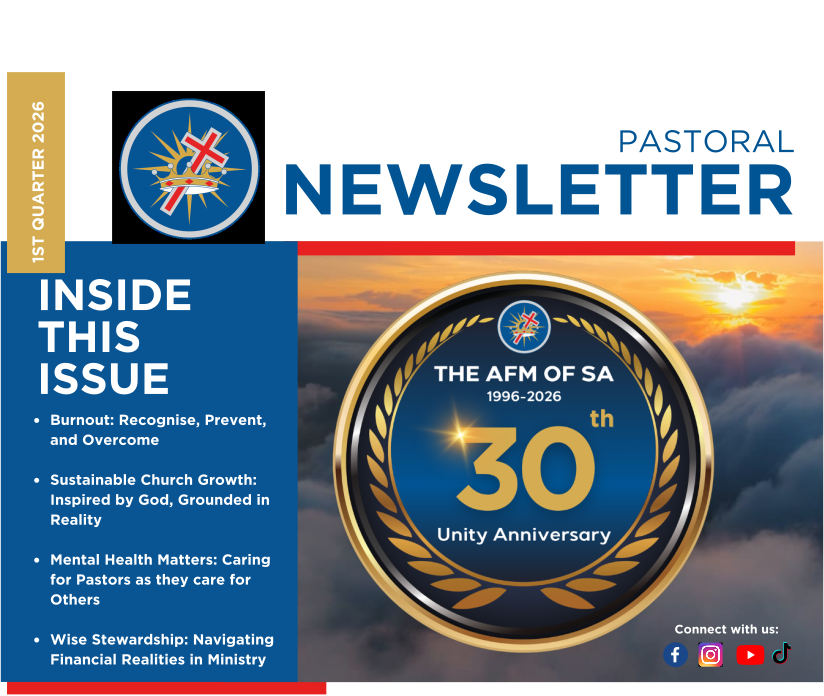
AFM Family,
Three decades ago, the Apostolic Faith Mission of South Africa stepped into a defining moment that reshaped its future. What had once been divided became united, as believers embraced the higher calling of reconciliation and the Biblical vision of being one in Christ. Over the past 30 years, this unity has become a powerful testimony of God’s grace, reflecting a church that speaks hope into the heart of a diverse nation.

As part of this milestone celebration, the AFM has developed meaningful resources to both honour the journey and inspire the future, including the Unity Anthem “Indlela (30 Years of Unity)”, the documentary “The AFM of South Africa’s Journey of Faith & Reconciliation (1996–2026)”, and the launch of the “Indlela” AFM Podcast, which focuses on strengthening unity in the years ahead. These resources stand as markers of remembrance and vision and are all available on the AFM YouTube channel (https://www.youtube.com/@AFMOFSA) for members and the wider community to engage with and be inspired.
As we journey through the first quarter of 2026, we do so with a renewed sense of purpose under the theme “Fuelling the Fire.” Across our National Office Bearers Empowerment Visits, this theme has come alive through key conversations and Spirit-led insights aimed at strengthening the Church at every level. In this edition, we further unpack the core topics that are being shared - each one a spark designed to sustain the flame of unity, deepen our spiritual vitality, and equip us for the road ahead.
BURNOUT: RECOGNISE, PREVENT, AND OVERCOME
Dr Henri Weideman | President - henri@afm-ags.org

Burnout is something many pastors quietly carry. You may see it in others, notice it in your congregation, or feel it yourself. It is not a sign of weakness - it simply means you are human and running on empty. God never intended us to lead from a place of exhaustion. He created us for a rhythm of work, rest, and renewal.
"He created us for a rhythm of work, rest, and renewal."
Burnout goes beyond ordinary tiredness. It is a deep physical, emotional, and spiritual exhaustion caused by ongoing stress and overload. It can show up as constant fatigue, irritability, feeling disconnected from God or your calling, loss of joy in ministry, difficulty concentrating, or even turning to unhealthy coping habits. Many faithful leaders in the Bible experienced similar struggles. What matters most is how we respond. Pastors are especially at risk because ministry is both meaningful and demanding. Pastors carry people’s pain, often feel pressure to always be strong, and work long hours without clear boundaries. It is easy to tie your identity too closely to your role and neglect your own spiritual and emotional needs. Recognising this is the first step toward healthier ministry.
Preventing burnout starts with building healthy rhythms. Rest is not optional - it is part of God’s design. Taking a true Sabbath and stepping away from constant demands is essential. It also helps to have someone you trust, a safe person you can speak to honestly. Setting boundaries is equally important. Learn to say no, protect your time with family, and plan your week wisely. Remember, you are more than a pastor.
A balanced life that includes exercise, hobbies, and meaningful relationships leads to stronger, more sustainable ministry. Above all, stay spiritually filled - not just for sermon preparation, but for a genuine relationship with God.
If burnout has already set in, there is hope. Start by acknowledging it. You are not failing - you are overwhelmed. Talk to someone you trust. Make space to rest and recharge, allowing your soul time to breathe. Refocus on God, not out of obligation, but out of relationship. Let go of the idea that everything depends on you and begin to share the load with others. Jesus offers a powerful invitation: “Come to me, all who are weary and burdened, and I will give you rest.” He sees your work and values your faithfulness, but reminds you that you are not just a worker - you are His child.
Take a moment to reflect: Are you rested? Are you overwhelmed? Do you need help? Are you allowing God to care for you? Burnout is real, but it is not the end of your story. Your calling matters, but so does your well-being. As you care for others, remember to care for yourself. You are not alone - God is with you every step of the way.
"...you are not just a worker - you are His child."

SUSTAINABLE CHURCH GROWTH: INSPIRED BY GOD, GROUNDED IN REALITY
Ps. Barend Petersen | Deputy President - barend@afm-ags.org

There is a bold and exciting vision before us: to plant 1,000 vibrant, Christ-centred churches across South Africa over the next ten years. This vision is not just about numbers - it is about transformed lives, restored communities, and advancing God’s Kingdom. Sustainable church growth begins with God. It is not driven by human effort alone but by the work of the Holy Spirit. True growth flows from prayer, worship, humility, and a deep reverence for God. Growth does not always happen at the same pace, but when it is God-led, it is lasting.
"...to plant 1,000 vibrant, Christ-centred churches across South Africa over the next ten years."
Strong, visionary leadership is essential. A healthy church needs leaders who can clearly communicate God’s vision, inspire others, and lead with integrity and passion. Leadership is not just about direction - it is about serving people and helping them grow. When leaders are spiritually grounded and focused on God’s calling, they can guide their congregations toward meaningful impact.
Relational health is critical. For pastors, family must remain a priority. Strong relationships with spouses, children, and close friends provide support and stability. Ministry and church growth should never come at the cost of one’s family life. Healthy relationships strengthen both the leader and the ministry.
Physical and mental health are equally important. Ministry can be demanding, and without proper care, it can lead to exhaustion and burnout.
Regular exercise, healthy eating, and proper rest are not luxuries - they are necessary. Mental health also deserves attention. Pastors often carry heavy burdens, and taking time for self-care, especially in the context of church growth, is essential. Simply put, you cannot pour from an empty cup.
Spiritual health remains the foundation of everything. The Bible reminds us that even great leaders faced struggles: Elijah experienced deep discouragement, Moses faced overwhelming pressure, and Paul endured hardship. Ministry has never been easy, but God’s grace is always sufficient. Staying connected to Him is what sustains us. This is why taking time to rest, reflect, and recover is so important. Just like a race car needs pit stops, leaders need moments to pause, refocus, and be renewed. These times of retreat are not a waste - they are an investment in long-term effectiveness.

Finally, healthy churches require strong teams. Leaders and members must be equipped, supported, and empowered to serve. Ministry is not a one-person effort - it is a shared calling. Together, we are called to reach the world with the message of hope, grace, and salvation.
Now is not the time to hold back. The world needs the church more than ever. As we depend on God and care for ourselves and one another, we can see sustainable growth that truly makes a difference.
MENTAL HEALTH MATTERS: CARING FOR PASTORS AS THEY CARE FOR OTHERS
Ps. Selby Khumalo | General Secretary - selby@afm-ags.org

Mental health is a topic that is often overlooked in church life, yet it is deeply important - especially for pastors. While much attention is given to caring for congregations, the well-being of those who lead them is sometimes neglected. Pastors are human too, and just like anyone else, they need care, rest, and support.
"Pastors are human too, and just like anyone else, they need care, rest, and support."
Some common mental health struggles pastors face include burnout, depression, anxiety, isolation, and compassion fatigue. Burnout can leave a person feeling drained and unmotivated. Depression may bring deep sadness and hopelessness. Anxiety can cause constant worry, while isolation may make someone feel alone even when surrounded by people. Compassion fatigue happens when continuous caregiving becomes overwhelming. These are real challenges, and they deserve to be taken seriously.
Unfortunately, there is still a stigma around mental health in many church communities. Some believe that struggling emotionally is a sign of weak faith, but that is not true. Seeking help is not a weakness - it is a step toward healing and strength. The Bible encourages us to care for our whole being, not just spiritually but emotionally and physically as well.
There are practical ways pastors can take care of their mental health. Building strong, trusted relationships with peers or mentors can provide much-needed support. Taking regular rest helps to restore energy. Learning to set boundaries and say “no” when necessary is also important. Pastors should not feel guilty about delegating responsibilities or taking time off. Seeking professional help from counsellors or therapists is another valuable step, and it should be seen as a positive and wise choice.
Spiritual wellness also plays a key role. Personal time with God should go beyond sermon preparation. Simple practices like prayer, reflection, journaling, and worship can bring peace and renewal. Ultimately, caring for yourself is part of your ministry. You cannot give your best to others if you are running on empty. By prioritising mental health, pastors not only help themselves but also set a healthy example for their congregations.
"The Bible encourages us to care for our whole being, not just spiritually but emotionally and physically as well."

WISE STEWARDSHIP: NAVIGATING FINANCIAL REALITIES IN MINISTRY
Ps. Rudi Coertzen | General Treasurer - rudi@afm-ags.org

Let us shine the light on finances - specifically, wise stewardship, transparency, and faithfulness in handling what God has entrusted to us. Scripture reminds us in Luke 16:10–11 that whoever is faithful with little can be trusted with much. The way we handle money reflects our hearts and our integrity. As 1 Corinthians 4:2 teaches, those who are given responsibility must prove faithful.
"...wise stewardship, transparency, and faithfulness in handling what God has entrusted to us."
For pastors, this responsibility begins at home. Our personal financial lives speak louder than our sermons. Psalm 24:1 reminds us that everything belongs to God, and we are simply stewards of His resources. This understanding should shape how we manage money in both our personal lives and our ministries.
One of the most important habits to develop is budgeting. We need more than prayer; we need a clear plan for where our money goes. A budget helps us track income, expenses, savings, and giving. It ensures that we live within our means and avoid unnecessary stress. Without a plan, it is easy to overspend without even realising it.
Another key principle is avoiding debt. Proverbs 22:7 warns that the borrower becomes a slave to the lender. Debt can limit your freedom and even threaten your ability to remain in ministry during difficult seasons. Learning to live within your means and saving toward purchases instead of borrowing can bring long-term stability and peace.
Saving is equally important. Life comes in seasons: Times of abundance and times of hardship. Just as Joseph prepared in Egypt for years of famine, we too should set aside resources for challenging times. If possible, having a financial cushion can make a significant difference when unexpected difficulties arise.
Generosity should also define our lives. Giving is not just something we teach; it is something we live. Whether it is supporting someone in need,
Generosity should also define our lives. Giving is not just something we teach; it is something we live. Whether it is supporting someone in need, paying for a meal, or contributing to the work of God, generosity reflects God’s heart. It also builds faith, both in our own lives and in the lives of others.
Contentment is another vital principle. In a world that constantly pushes us to want more, we must learn to be satisfied with what God has given us. This protects us from making impulsive financial decisions and helps us trust God’s timing and provision.
Integrity is at the heart of all financial stewardship. Hidden struggles or poor decisions can lead to serious consequences. Seeking advice or counselling is not a sign of weakness but of wisdom. Accountability and honesty protect both our lives and our ministries. In the church context, financial stewardship must be handled with great care. Budgets should reflect the mission of the church, not just internal expenses. Transparent processes, shared decision-making, and proper oversight are essential. Regular financial reporting and audits build trust and ensure accountability.
Finally, transparency is key. How we handle finances tells a story to our congregation and community. When we act with honesty and responsibility, we build credibility and honour God.
As we reflect on these principles, let us ask ourselves: Can God trust us with more? May we commit to being faithful, wise, and accountable stewards in every area of our lives.
Celebrating 30 Years of Unity


CONCLUSION

As we continue fuelling the fire in 2026, we look ahead with great anticipation to what lies before us in the coming weeks. The month of May invites us into a sacred rhythm of reflection and renewal, as we prepare to share special messages for Ascension Day, the Week of Pentecost, and Pentecost Sunday - moments that call us to lift our eyes, open our hearts, and welcome a fresh outpouring of God’s Spirit.
At the same time, the flame of fellowship and impartation will burn brightly through our upcoming AFM Departmental Conferences. We eagerly look forward to the National Men’s Fellowship Conference (15–17 May), the AFM National Youth Conference (26–28 June), and the AFM National Sisters’ Fellowship Conference (10–12 July). Each of these gatherings creates space for connection, strengthening, and spiritual growth across every generation.
In addition, we celebrate a significant milestone on 25 May as the AFM marks its 118th Birthday. This moment will not only honour our rich legacy but also inspire us toward the future God is calling us into. Further communication will soon be shared regarding the mobilisation of a special online AFM Birthday Campaign, inviting every member to participate in this meaningful celebration.
May we continue to carry the flame with intention - nurturing it in our hearts, our churches, and our communities. And as we do, may the fire of God’s presence burn ever stronger among us, leading us forward together in unity and purpose.
Henri Weideman