Test Post Tee
September 5, 2025
Condolences: Vanderbijlpark Tragedy
January 20, 2026Test Post Tee
September 5, 2025Condolences: Vanderbijlpark Tragedy
January 20, 2026
AFM Family,
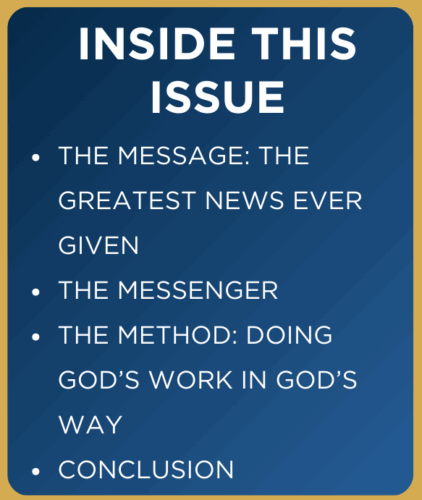
I encourage all our Pastors and Assemblies to take some time to unpack the themes from our National Conference. Some Pastors have already started preaching a short series on each of the three sub-themes: The Message, The Messenger, and The Method. These themes can serve as a powerful starting point for the new year, helping us to think more practically about how we should preach the Gospel and, just as importantly, how we should live it out every day.
In this Pastoral Letter, you will find articles that explore these themes. We also have video clips from the conference speakers that you are welcome to use. They can serve as helpful tools when preparing your own sermons, or you can play them during a service, Bible study, or small group session to spark deeper reflection and discussion.
Make full use of these resources. They are there to equip us, inspire us, and help us keep the heart of the Gospel central in everything we do. By engaging with these materials, we not only strengthen our ministries but also deepen our understanding of what it truly means to be the Church: people shaped by the Gospel, living it out with clarity, courage, and purpose.
THE MESSAGE: THE GREATEST NEWS EVER GIVEN
There are many important messages in the world - messages that bring hope, warnings, instructions, or encouragement. But there is one message that stands above all of them. It is the greatest message ever given to humanity. It is the message of the Gospel. When Jesus was born, an angel announced this message to a group of humble shepherds with these powerful words in Luke 2:10: “Do not be afraid. I bring you good news that will cause great joy for all the people.” From the very beginning, the message about Jesus was described as good news - news that brings joy, peace, hope, and salvation.
I was asked to share this beautiful Gospel message in only ten minutes. My first reaction was simple: “It is impossible!” How can anyone explain the greatness of God’s love, the meaning of the cross, the power of salvation, and the mission of the Church in just ten minutes? But then the Lord gently reminded me that He had already done it - perfectly, clearly, and beautifully through one verse: John 3:16. That one verse contains the entire message of the gospel in a single sentence. It captures the heart of God, the mission of Jesus, and the promise of eternal life. It is truly the gospel in a nutshell.
1. The Message is About the Father
The first part of John 3:16 focuses on God the Father: “For God so loved the world that He gave…”
“For God”: The message begins with God. He is the Creator, the Author, and the Sustainer of everything (Genesis 1:1; Romans 11:36). This means our message does not start with us - our goodness, our works, or our achievements. It starts with Him. Everything in life, everything in existence, comes from God and depends on God.
“So loved”: In a world filled with fear, hatred, violence, and brokenness, the Gospel declares something completely different: God loves. Not just a little, not just sometimes: He so loved... Romans 5:8 tells us that God showed His love by sending Christ to die for us while we were still sinners. Ephesians 2:4–5 says He is rich in mercy and great in love. The Gospel message is rooted in this truth: Before we did anything for Him, He already loved us.
“The world”: God does not love only those who serve Him or those who behave well. He loves the whole world - every tribe, every nation, every person, even those who reject Him. This means our responsibility is to take the message of God’s love everywhere (Luke 24:47; Romans 3:22). The Gospel is not exclusive. It is for everyone.
“That He gave”: Love gives. Real love does not remain a feeling; it becomes an action. God demonstrated His love by giving the most precious gift of all - His Son. Romans 8:32 says He did not spare His own Son but gave Him up for us all. Ephesians 2:8-9 reminds us that salvation is a gift, not something we earn. The Father is a giver, and He gave His very best.
2. The Message Is About the Son: Jesus
John 3:16 continues: “…His one and only Son, that whoever believes in Him shall not perish but have eternal life.”
“His one and only Son”: Jesus is not just a prophet, teacher, or miracle worker. He is God’s unique, one-of-a-kind Son. He came from the Father’s heart (John 1:1–2, 14, 18). God did not send an angel or a servant. He sent His Son to take our place, carry our sins, and open the way to salvation.
“That whoever believes in Him”: The message of salvation is centred on Jesus. He is the only way to the Father (John 1:12; John 5:24). Salvation is not about working harder or trying to be good enough. It comes through faith - believing in who Jesus is and trusting in what He has done for us on the cross.
“Shall not perish”: God’s desire is not to destroy people. His heart is for salvation, not condemnation (Matthew 18:14; 2 Peter 3:9). The warning is real: Without Christ, we are spiritually lost - but the hope is even greater. God wants all to be saved.
“But have eternal life”: This is the heart of God’s plan, for every person to receive and enjoy eternal life (John 5:24; John 17:3). Eternal life is not only life after death; it is a relationship with God that begins the moment we believe.
3. The Message Is About the Holy Spirit
At first glance, some may wonder, “Where is the Holy Spirit in John 3:16?” I had the same question. The Gospel message is not complete without the Holy Spirit: He is essential. So, I told God, “I have a problem, Lord. The Spirit is not mentioned in this verse.” God answered: “The Holy Spirit is there.”
He is between the words and the lines. Jesus described the Spirit as wind in John 3:5–8. You cannot see the wind, but you see its effects. In the same way, you may not see the Holy Spirit’s name in the verse, but His presence and His work are everywhere. At Pentecost, the Spirit came like a rushing wind (Acts 2:2–4). He moves in powerful ways, even if invisible.
He makes the Scripture come alive. Some people read John 3:16, and nothing happens. But when the Holy Spirit touches our hearts, something moves inside us. We feel stirred, challenged, and excited. The words become alive (John 6:63; 2 Corinthians 3:6). That is the Holy Spirit at work.
He makes the message personal. Finally, the Holy Spirit is the One who makes the greatest message ever - my message. He convinces us of sin, righteousness, and truth (John 16:7–11). He guides us into all truth (John 16:13). He takes the message about the Father and the Son and writes it on our hearts. Without Him, the Gospel stays on paper. With Him, it becomes a living reality.
The message of the Gospel is simple, powerful, and life-changing. It is the greatest message ever given: About the Father who loves, the Son who saves, and the Spirit who gives life. And this message is not only true - it is personal. It is for you, for me, and for the whole world. May we treasure it, live it, and share it with joy.
THE MESSENGER
When we think about being God’s messenger, it is easy to imagine sharing messages of comfort, hope, and encouragement. But in the Bible, God’s messengers often had to speak into tough situations. They carried messages that were not always easy to deliver or pleasant to hear. One example is found in Habakkuk 2. The prophet lived in a difficult time of violence, injustice, and corruption that filled the land. God gave him a message of “woes,” words of warning and judgement. These were messages of rebuke, calling people to repentance. They were not nice messages, and they certainly did not make the messenger popular. But they were necessary because God wanted His people to turn back to Him.
That was the responsibility of the herald: to share the message faithfully, no matter how difficult it was. In Habakkuk’s case, it was a vision of judgement. Today, the messenger of God still carries a serious responsibility. The times may be different, but the calling remains the same: Speak truth, call people back to God, and do so with courage and obedience.
Jesus understood this tension very well. In Matthew 10:16 He said, “I am sending you out like sheep among wolves. Therefore, be as shrewd as snakes and as innocent as doves.” In other words, the messenger must be wide awake. We cannot be naïve or careless. We must be alert, wise, and able to make good decisions in a world that often opposes the message of Christ.
To be shrewd means to have sharp judgement. It speaks of clever, discerning awareness and the ability to read situations well. A shrewd messenger understands people, understands danger, and knows how to navigate challenges with wisdom. Paul strengthens this idea in 1 Corinthians 14:20: “Brothers, stop thinking like children. In regard to evil be infants, but in your thinking be mature.” While our hearts must remain innocent toward evil, our minds must be mature, disciplined, and aware. Proverbs 14:15 echoes the same idea: “The simple man believes every word, but the prudent man watches his steps.” A messenger who is wide awake does not just accept everything, but examines carefully, listens attentively, and acts wisely.

Jesus did not only say we must be shrewd: He also said we must be innocent as doves. The dove speaks of purity, gentleness, and harmlessness. It points to the intentions of the heart. A true messenger of God is not out to harm, manipulate, or deceive. Their heart must be clean. Their reputation must be above reproach. As 1 Timothy 3:7 reminds us, a good reputation matters in ministry because the messenger represents the message.
Isaiah 52:7 paints a beautiful picture: “How beautiful on the mountains are the feet of those who bring good news…” The verse mentions mountains and hills. These represent the difficult terrains - the challenges, pressures, and tough circumstances that often come with being a messenger of salvation. Sharing the Gospel is not always smooth or easy. Sometimes the messenger must climb, struggle, and push through spiritual and emotional obstacles. But despite the difficulty, the news we carry is the best in the world. And we carry that message in our hands - the Bible, the Word of God. Some may mock the message. Some may laugh at the idea of salvation. Some may reject the call to right living. But others will receive it. Others will welcome it. Others will be saved because the messenger showed up.
There is a powerful story from the AFMI (AFM International) conference in Lusaka. At a KFC, someone asked, “Are you pastors?” We must remember that we have the message with us, not just in our hands but in our lives. When we responded, one soul was saved right there. This reminds us to keep our message simple and direct. Sometimes you must just cut the long story short and ask the most important question: “Would you like to receive Jesus as Lord and Saviour?” And then lovingly lead the person to say “Lord Jesus…” - The task of the messenger is to finish the assignment.
This brings us to the seriousness of our calling. Ezekiel 33 gives a sobering reminder: If the watchman does not blow the trumpet, people will die. If the messenger does not arrive with the message, there are consequences. That is why we cannot “knock off.” The herald of God is always on duty. The difference between us and the courier company worker is simple: When they take off their uniform, they are off duty. But as God’s messengers, we never take off the garment of our calling. If we knock off spiritually, if we stop being alert, if we stop carrying the message, someone might never hear it – and it could have saved their life.
So neighbour, do not knock off. Remember: If the messenger is silent, the message will not arrive. That is why we must support one another, work together, and help each other grow into mature Christians. We are not alone in this calling. Together, we carry the message of life, hope, and salvation to a world that desperately needs it.
THE METHOD: DOING GOD’S WORK IN GOD’S WAY
When we talk about “the method,” most people immediately think of a plan, a system, or a particular way of doing something. And they would be right. A method is not just an activity - it is the approach behind the activity. It is the structure, the attitude, and the spirit that drive what we do. Various definitions describe a method as a procedure for accomplishing something, a technique guided by a clear plan, or simply the quality of being organized and purposeful in our actions. In other words, it is not only what we do that matters, but how we do it.
Many years ago, a well-known South African fuel company used a catchphrase that said: “It’s not what we do but the way that we do it, that makes you number 1.” That statement applies strongly to ministry as well. In the Church, we know what we are called to do. The Bible is clear, and our mission is not hidden. But God also cares deeply about the way we go about fulfilling that mission. Our method says as much about our faith as our message does.
So, what is it that we actually do? What is the core task of the Church and of every believer? Quite simply, we are the bearers and sharers of the Good News of God’s grace. We carry a message of hope, forgiveness, and transformation into a hurting world. God has entrusted us with the Gospel - not as a burden, but as a privilege. We do not invent the message; we simply deliver it. And we deliver it because Jesus Himself commanded us to.
Our Biblical Mandate
The Great Commission in Matthew 28:19–20 remains the foundation of our calling: “Therefore, go and make disciples of all nations, baptising them in the name of the Father and of the Son and of the Holy Spirit, and teaching them to obey everything I have commanded you. And surely, I am with you always, to the very end of the age.”

This is not a suggestion. It is a mandate - a clear instruction from Jesus. Our mission is to make disciples. That includes going out, sharing the good news, baptising new believers, teaching them, walking with them, and helping them grow in obedience. And the promise stands firm: Christ is with us always. But even with such a clear mission, the method remains important. How we carry out this mandate determines whether we serve effectively, fruitfully, and faithfully. The method of Christian ministry has several essential elements. These elements shape our attitude, our behaviour, and our approach to Kingdom work. They can be summed up in five key components:

CONCLUSION
God has entrusted us with His message, but He has also called us to embody His character while delivering it. Humility, simplicity, passion, relevance, and a Godly lifestyle are not optional extras - they are essential parts of the method Jesus modelled for us. When our method aligns with God’s heart, our ministry becomes more than activity; it becomes a powerful expression of His grace in action. May we commit not just to doing God’s work but doing it in God’s way.
Friendly Regards
Henri Weideman
Articles are an adaptation of the authors’ original work for the purpose of this publication.